Documenting screw thread step file?

How do you document screw threads in a step file for cnc milling machine?
Do you literally add the screw thread in the 3D model?
Or just a hole with the diameter of the thread?
4 Answers

If it's for a regular CNC machine (not 3D printing) then there's no need for the actual threads to be modeled and it wouldn't do any good. It would actually be incorrect to model the threads. Including the threads makes the CAD/CAM process more difficult.
So just a hole for female threads or a boss for male threads is all that is required. Typically the female thread hole diameter would be the tap drill size (thread minor diameter) and the male boss would be the thread major diameter.
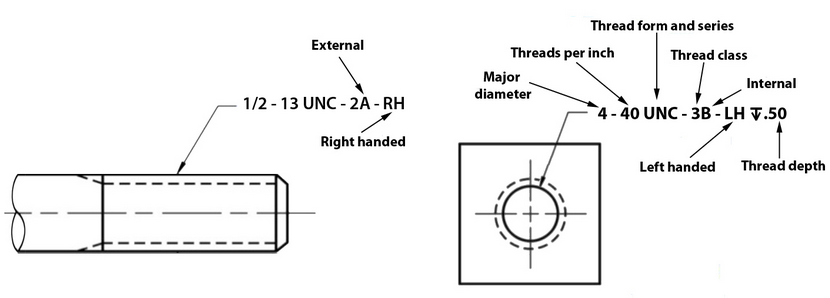
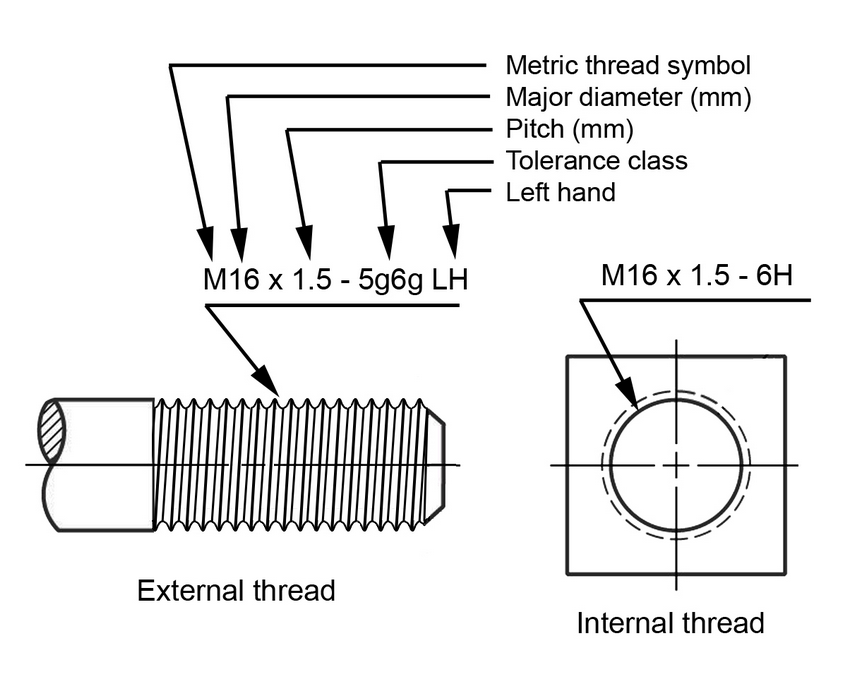
Since there is no nomenclature about the thread details included in a step file, a separate 2D detail drawing is required. This nomenclature should include nominal outside thread diameter, pitch, fit class, depth/length, and type.
At this point in time there is no standardized 3D model type that transfers sufficient information about screw threads. It requires supplemental documentation. Native CAD files such as those used by Inventor and Solidworks contain the information but, as far as I know, no CAM programs directly accept this data.

*IN* a STEP file?
Using PMI (Product & Manufacturing Information) in your native CAD suite, then exporting that data in the STEP generation process. As Mr. Wiley stated though, your model shouldn't contain a thread representation, just the specifications necessary to meet the standard (ISO, ASME). Model-based definition, digital product definition data, is covered in ASME Y14.41 if you're interested in digging into that.

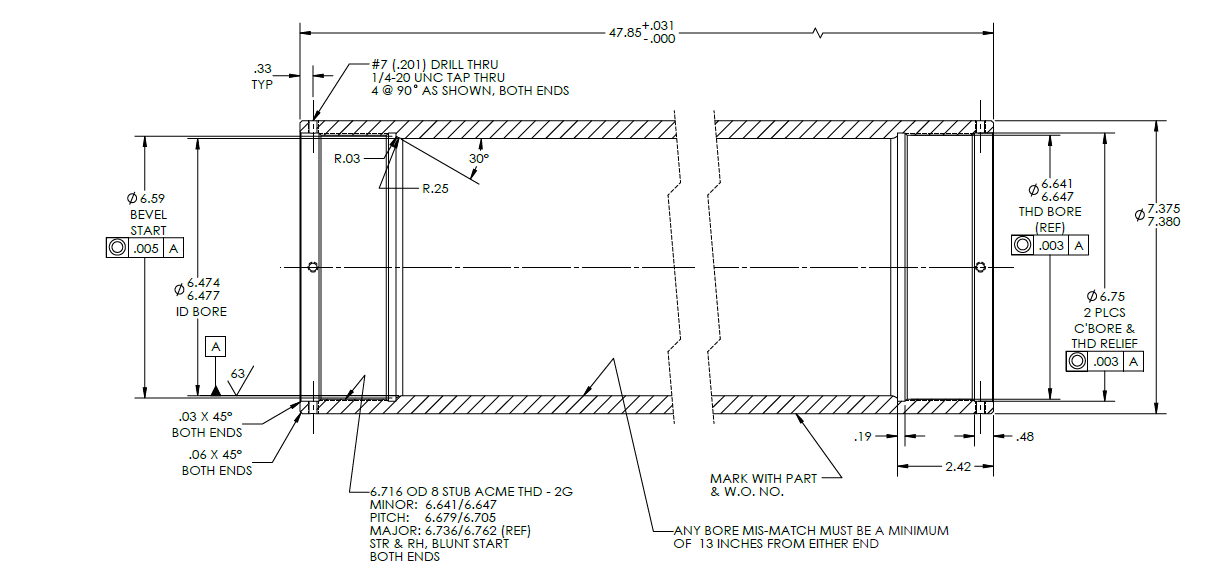
rather then just sending a STL/STEP model, I would suggest making a print and putting your thread callouts on that. It will save a lot of confusion in the long run and help document any changes needed in the future.
Here is an example of a print to show how I was trained to do it. There are two examples, the end threads that are custom (lots of detail) and the set screw holes (standard and not that much detail is needed).
Seems the one question missing here is... are you paperless? And a number of companies have adopted paperless over the last few years, then you'll need to cover thread calls in your native modeling environment or in the export of STEP.
I'd stick to a standard for callouts, even if the company you work for hasn't adopted one yet. Why? Because you're either going to get 10 different interpretations of what the "correct way" is or you can place the callout to a standard and others unfamiliar with the call, can Google it. At which point they'll find a specification that leaves nothing to interpretation.