

VTOL UAV DESIGN AND FLIGHT TEST

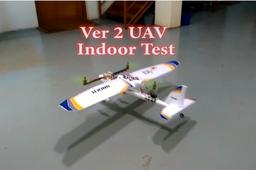
This video contains all the design and flight testing details of the following VTOL UAVs.
➡️Coax Copter,
➡️Bi Copter,
➡️Tri Copter,
➡️Quad Copter,
➡️Hybrid Fixed-Wing VTOL UAV,
➡️Tilt Rotor VTOL UAV
What is a MultiCopter and How Does it Work?
A multicopter is a mechanically simple aerial vehicle whose movement is controlled by accelerating or decelerating multiple downward thrust motor/propeller units.
Multicopters are aerodynamically unstable and require an onboard computer (autopilot) for stable flight. As a result, they are "fly by wire" systems and if the system doesn't work, you're not flying. The autopilot maintains a precise estimate of its orientation and position by integrating data from the gyroscopes and accelerometers of the small on-board MEMs.
The quadcopter shown above is a simple type of multicopter, with each motor/propeller rotating in opposite directions from the two motors on either side of it (i.e. motors at opposite corners of the frame rotate in the same direction).
A quadcopter can control its roll and pitch rotation by speeding up two motors on one side and slowing down the other two. For example, if the quadcopter wants to roll to the left, it will speed up the motors on the right side of the frame and slow down the two on the left. Similarly, if it wants to spin forward, it speeds up the rear two motors and slows down the front two.
The copter can turn left or right by speeding up two motors that are diagonal to each other and slowing down the other two.
Horizontal movement is accomplished by temporarily speeding up/decelerating some of the motors so that the vehicle leans in the desired direction of travel and increases the overall thrust of all the motors so that the vehicle moves forward. Generally, the more the vehicle leans, the faster it travels.
Altitude is controlled by accelerating or decelerating all motors simultaneously.
What is the difference between a MultiCopter and a UAV/Drone?
A multicopter becomes a UAV or drone when it is capable of autonomous flight. Typically this means taking accelerometer and gyro information and combining it with barometer and GPS data so the flight controller understands not only its orientation, but also its position.
For more details contact email: rambo.tss19@gmail.com
-
Step 1: Follow the video


-
Step 2: Video Link
-
Step 3: YouTube Link
-
Step 4: YouTube Link

