Learn about the GrabCAD Platform
Get to know GrabCAD as an open software platform for Additive Manufacturing
Visit our new homepage
Home
Control
Shop
Streamline Pro
Partner Program
Print
Community
Log in
Library
Challenges
Groups
Questions
Tutorials
Engineers
Blog
Log in
Learn from thousands of free Tutorials.
New user?
Join the community
or
log in.
Tutorials
Most liked all time
Recent
Most liked
Most viewed
Most commented
This week
This month
All time
Category
Design & CAD
Modeling
Drafting
Assemblies
BOM
Dimensioning / Tolerancing
Translations
Manufacturing & CAM
3D Printing
Tooling
NC Machining
Composites
Measurement / Inspection
Simulation & CAE
FEM
CFD
Kinematics
Process Simulation
Engineering Fundamentals
Theory
Process
Standards
Other
Software
Snagit
Alibre Design
ArchiCAD
AutoCAD
AutoCAD Electrical
Autodesk 3ds Max
Autodesk Alias
Autodesk Inventor
Autodesk Maya
Autodesk Revit
Autodesk 123D
BricsCAD
Bentley MicroStation
BlenderCAD
BobCAD-CAM
CATIA
Delmia
DraftSight
FreeCAD
Femap
Fusion 360
Geomagic Design
IronCAD
JT
Kompas-3D
KeyCreator
KeyShot
Lagoa
Luxology
Mastercam
Moi3D
NX Unigraphics
OBJ
Onshape
OpenSCAD
Parasolid
Powermill
Powershape
Pro/Engineer Wildfire
PTC Creo Parametric
PTC Creo Elements
Rhino
SpaceClaim
SOLIDWORKS
solidThinking Evolve
Solid Edge
SolidFace
STEP / IGES
SketchUp
STL
TopSolid
TinkerCAD
T-Flex CAD
TurboCAD
VectorWorks
ViaCAD 3D
VRML / WRL
ZW3D
GrabCAD Print
Rendering
GrabCAD Community
GrabCAD Workbench
Text file
3D Manufacturing Format
Cinema 4D
Other
Skill level
All levels
Beginner
Intermediate
Expert
Tooling
×
Process Simulation
×
Process
×
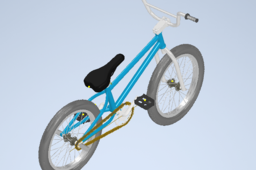
Bicycle Moving Animation
Amar Falah Riyanto
in
Process Simulation
2
1
Intermediate
Bicycles were introduced in the 19th century in Europe. By the early 21st century, more than 1 billion were in existence. These numbers far exceed the number of cars, both in total and ranked by the number of individual models produced. They are the principal means of transportation in many regions. They also provide a popular form of recreation, and have been adapted for use as children's toys, general fitness, military and police applications, courier services, bicycle racing, and bicycle stunt
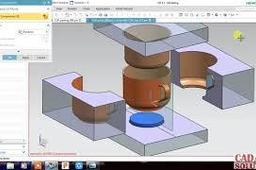
#NX MOLD WIZARD #Plastic Cup mold design
Umesh Arora
in
Tooling
2
0
Beginner
#NX MOLD WIZARD #Plastic Cup mold design
siemens
cavity
core
solutions
cam
cad
design
cup
wizard
mold
nx
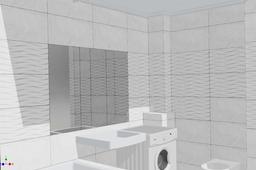
Automated parameterized model of tiled wall (Autodesk Inventor 2020)
Alexey Z Buchas
in
Process
2
3
Beginner
Model of a tiled wall for designed of bathroom, WC etc. https://grabcad.com/library/automated-parameterized-model-of-tiled-wall-1
tiles
wall
bathroom
tile
parameterization
interior
automation
design
Course on Design of Refrigeration Unit(below 5 tonne)
Shehbaz
in
Process Simulation
2
5
Expert
Refrigeration Equipment design particularly air cooled type: Bar-Plate and Fin-Tube coolers.
T100 . motor running
Ahmed Eldiarby
in
Process Simulation
1
0
Expert
T100. Starting the engine, adjusting the motor speed, setting the start time and reversing the movement https://www.youtube.com/watch?v=FGdVss786x0
أنواع المثاقيب و إستخداماتها
Ayman Kidwany
in
Tooling
1
0
Intermediate
سلسلة التثقيب - الجزء الأول
Tesla Cybertruck - تسلا سايبر تراك
Ayman Kidwany
in
Tooling
1
0
Intermediate
تكنولوجيا تصنيع سايبر تراك من الإستانلس إستيل
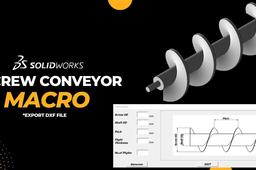
Solid works Macro Playlist - 17
SHAPE IT
in
Tooling
1
0
Intermediate
In this tutorial you will learn solidworks macro automation tools Kindly like the video and subscribe the channel for more interesting macro. Need customised solidworks macro? mail us : For freelancing work or inquires please drop a mail to shapeit.socialmedia@gmail.com
solidworks api
api
vba
solidworks macro
solidworks automation
macro
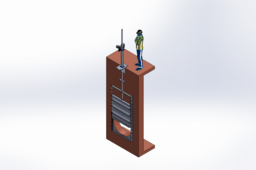
Wall mounted penstock
Omar Khaled
in
Process
1
0
Intermediate
Wall mounted penstock with circular hole
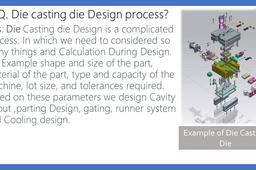
Q. Die casting die Design process?
Shuvam Kumar
in
Process
1
5
Intermediate
Ans: Die Casting die Design is a complicated process. In which we need to considered so many things and Calculation During Design. For Example shape and size of the part, material of the part, type and capacity of the machine, lot size, and tolerances required. Based on these parameters we design Cavity layout ,parting Design, gating, runner system and Cooling design.
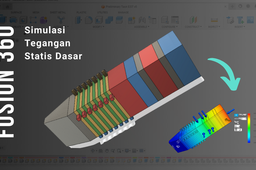
Simulasi Tegangan Statis Dasar di Fusion 360
khoirul anam
in
Process Simulation
1
0
Beginner
33 x ditonton 22 Mei 2025 Halo para desainer dan engineer! Saya di sini untuk mempermudah Anda dalam memahami simulasi tegangan statis di Fusion 360. Dari setup awal hingga interpretasi hasil, kita akan bedah semua fitur penting dengan studi kasus yang mudah dipahami. Mari kita rancang dan analisis bersama untuk menciptakan inovasi yang lebih baik! Jangan lupa subscribe dan tinggalkan komentar jika ada pertanyaan.
httpsyoutubejgheqftj3kysiu2nfpwsahqioyyoh
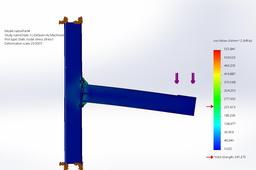
Simulation of I section beam
Kshitij Raut
in
Process Simulation
1
0
Intermediate
Simulation and analysis of stress or failures in a beam.
Venting system of an Injection Mold
Murali K
in
Tooling
1
0
Beginner
Venting is a process that is used to remove trapped air from the closed mold and volatile gases from the processed molten plastic. Without venting, the trapped air will compress as plastic tries to force it out of the mold and the air will ignite, burning the surrounding plastic and causing charred areas on the molded part. Trapped air also keeps the plastic from filling in those areas of the cavity where the air is trapped so a non-filled (or short) part is molded. Volatile gases will be absorbed by the plastic and will cause voids, blisters, bubbles, and a variety of other defects. The concept of venting is simple: provide many pathways to allow trapped air and volatile gases to escape from the mold quickly and cleanly. The pathways should lead directly from the edge of the cavity image of the mold, or through ejector and/or core pin clearance holes, to the outside atmosphere surrounding the mold. These pathways need to be deep enough to let air and gases out easily, but not deep enough to allow the molten plastic to escape through them. Venting should be present on every mold and the vents should be inspected periodically to make sure they are not blocked due to scale buildup. The scale can build up especially if the vents are not properly designed. The correct design is discussed in the next section. VENT DIMENSIONS FOR COMMON MATERIALS Depending on the type of plastic being molded, and whether it is stiff or easy flow, the vent depths should range from 0.0005'' to 0.0020'' in depth. Table 1 gives average depths for some common materials. MATERIALVENT DEPTH (in.)ABS0.002Acetal0.0007Acrylic0.002Cellulose Acetate0.001Cell. Ace. Butyrate0.001Ionomer0.0007Nylon 6/60.0005Polycarbonate0.002Polyethylene0.001Polypropylene0.001Polyphenylene Oxide0.002Polyphenylene Sulfide0.0005Polysulfone0.001Polystyrene0.001PVC Rigid0.002Pvc Flexible0.0015 Table 1 Recommended Vent Depths The vent acts like a window in a wall. When the mold is closed the vent appears as a small tunnel going from the cavity to the edge of the mold. The dimension nomenclatures for the vent are shown in Figure 1. Figure 1 Typical Vent Dimensions. There are three major dimensions for the vent. First is ``D'', the vent depth, already determined by the chart shown in Table 1. Then, comes ``W'', the vent width. This can be anywhere from 1/8 inch wide or more, and a common width is 1/4 inch. There is no maximum width to a vent, but to be practical it should be somewhere between 1/8 and 1/2 inch in width. The final dimension is ``L,'' which stands for land. This dimension should be a minimum of 0.030 inch and a maximum of 1/8 inch. If it is too short, the remaining steel is too weak and will not hold up. If it is too long, the tunnel shape of the vent is too great and the hot gases and trapped air will condense in the tunnel as they travel through the opening, and block the venting action. This will not occur in the first 1/8 inch of travel. Therefore, we make the ``L'' dimension a maximum of 1/8 inch and then open up the depth and/or width of the vent to allow the condensed gases to deposit beyond the vent itself. HOW MANY VENTS ARE NEEDED? The simple answer is that you cannot have too many vents. The more detailed answer is to have at least 30% of the perimeter of the cavity image in vents, equally spaced around that perimeter, as shown in Figure 2. Figure 2 How many vents? Note that the part is small. It measures 2-1/2'' per side. By measuring the perimeter of the part, we add up the sides to get a total of 10 inches. If 30% of that should be in vents, we need a total of three inches worth of vents. If we use 1/4 inch wide vents, we end up with a total of 12 vents for this part. They can be equally spaced as shown, or begin by placing a vent in each of the four corners, one directly opposite the gate, and the others equally spaced in the remaining areas. Another, more conservative approach to venting states that there should be a vent at least every inch along the perimeter of the part cavity. In that case, there would be at least 10 vents for the part in Figure 2. Do not forget to vent the runner. Any air or gas that is trapped in the runner gets pushed into the cavity and must be removed from there. One of the big advantages of venting is that, if properly done, it allows gas and air to get out quickly and helps the plastic to inject faster and at lower injection pressures, thereby reducing stress and speeding up cycle times.
How to do a Tortilla & Nachos Cutter
Manolo Valenzuela
in
Tooling
1
0
Beginner
See the video. https://www.youtube.com/watch?v=2XF1tAk3XAU&t=2s&ab_channel=ManuelValenzuela
keycreator
nx
catia
solidedge
inventor
solidworks
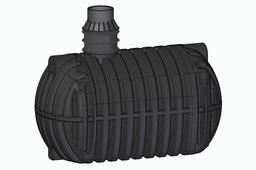
Instructions for installing RoDrive
Project ROTO
in
Process
1
0
Beginner
RoDrive tanks are designed for underground installation and are suitable for various purposes and applications. They can be used as fire water tanks, containments, water reservoirs and more. They are characterized by excellent statics, which enable the tank to be installed under the driving surfaces up to load class C250. The free-standing installation of the collector is not allowed. When installing collectors, it is necessary to follow the manufacturer's instructions and installation. In cases where simple and independent installation could not be consulted with the manufacturer. Landslides and floods and other difficult terrains require the advice of an experienced expert. We also offer advice and presence during the excavation, which enables you to install the product correctly and with high quality. If a drawing of installation and burial of a specific project is required, contact the ROTO technical team. For warranty claim cases in the event of damage to the tank, the entire installation must be documented with photographic installation procedures.
1
…
5
6
7
…
13