Learn about the GrabCAD Platform
Get to know GrabCAD as an open software platform for Additive Manufacturing
Visit our new homepage
Home
Control
Shop
Streamline Pro
Partner Program
Print
Community
Log in
Library
Challenges
Groups
Questions
Tutorials
Engineers
Blog
Log in
Learn from thousands of free Tutorials.
New user?
Join the community
or
log in.
Tutorials
Most liked all time
Recent
Most liked
Most viewed
Most commented
This week
This month
All time
Category
Design & CAD
Modeling
Drafting
Assemblies
BOM
Dimensioning / Tolerancing
Translations
Manufacturing & CAM
3D Printing
Tooling
NC Machining
Composites
Measurement / Inspection
Simulation & CAE
FEM
CFD
Kinematics
Process Simulation
Engineering Fundamentals
Theory
Process
Standards
Other
Software
Snagit
Alibre Design
ArchiCAD
AutoCAD
AutoCAD Electrical
Autodesk 3ds Max
Autodesk Alias
Autodesk Inventor
Autodesk Maya
Autodesk Revit
Autodesk 123D
BricsCAD
Bentley MicroStation
BlenderCAD
BobCAD-CAM
CATIA
Delmia
DraftSight
FreeCAD
Femap
Fusion 360
Geomagic Design
IronCAD
JT
Kompas-3D
KeyCreator
KeyShot
Lagoa
Luxology
Mastercam
Moi3D
NX Unigraphics
OBJ
Onshape
OpenSCAD
Parasolid
Powermill
Powershape
Pro/Engineer Wildfire
PTC Creo Parametric
PTC Creo Elements
Rhino
SpaceClaim
SOLIDWORKS
solidThinking Evolve
Solid Edge
SolidFace
STEP / IGES
SketchUp
STL
TopSolid
TinkerCAD
T-Flex CAD
TurboCAD
VectorWorks
ViaCAD 3D
VRML / WRL
ZW3D
GrabCAD Print
Rendering
GrabCAD Community
GrabCAD Workbench
Text file
3D Manufacturing Format
Cinema 4D
Other
Intermediate
All levels
Beginner
Intermediate
Expert
weld
×
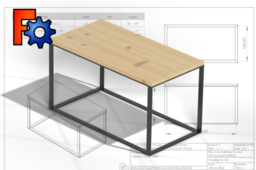
Welded coffee table
Quentin Plisson
in
Modeling
4
3
Intermediate
In this tutorial we will look at how to use the 'WarehouseProfiles' function in the MetalWB workbench to create a simple welded structure. We will also see how to insert a cutting list into the drawing using the FCTreeView macro and Techdraw.
FreeCAD
table
welded
structure
welding
weld
metalwb
Solidworks CSWPA-WD weldments sample exam
Ninjago
in
Modeling
3
0
Intermediate
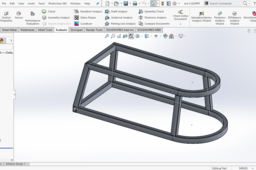
. . . . . . . . This is the Solidworks CSWPA-WD weldments sample exam Exam link: https://www.solidworks.com/sw/support/8539_ENU_HTML.htm Notice : This sample exam doesn't cover all solidworks weldments functionalities For those who want to pass the real exam , it features : -Weldment profile creation -Placing the Weldment profile in the Weldment profile library -Basic and Advanced Weldment Part creation -Weldment corner modification -Placing gaps at corners and segment intersections -End Caps -Gussets -Weldment Part modification -Trim/Extend Command -3D Sketch Creation -Cut List Folder management in the Weldment Part -Cut List creation in the Weldment Drawing Feel free to ask questions. Good luck.
SOLIDWORKS
cswpa-wd
soudure
weld
solidworks
How to analyse Pro Engineer component in Ansys 10.0 welding property?
harikrushna dodiya
in
Design & CAD
2
0
Intermediate
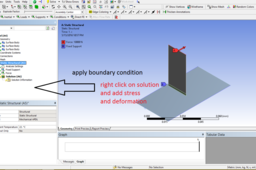
u can weld through following step in workbench There are one "WELD" option in geometry. there u can create weld
Pro/Engineer Wildfire
property
weld
Electrode and Wire Classifications in Arc Welding: A Technical Overview
Aygün Karaköse
in
Theory
1
0
Intermediate
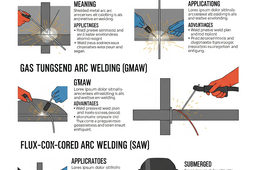
arc welding processes such as SMAW (Shielded Metal Arc Welding), MIG (Metal Inert Gas), TIG (Tungsten Inert Gas), and MAG (Metal Active Gas), electrodes and wires are classified and coded according to international standards. These designations help welders select the appropriate consumables to ensure weld quality and suitability for specific applications. This article explains common electrode and wire classification systems with representative examples and their meanings.
weldingengineer
weld
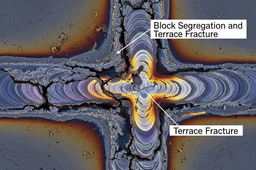
🔩 Block Segregation and Terrace Fracture in Welded Joints: The Hidden Dangers Introduction
Aygün Karaköse
in
Theory
0
0
Intermediate
A weld seam isn’t just a shiny metallic line on the surface. Beneath it lies a world of microstructures and processes that shape the fate of the material. In welding engineering, some invisible phenomena can lead to very visible problems. In this article, we will explore two often-overlooked yet critical concepts: block segregation and terrace fracture.
weld
weldigengineer
welding
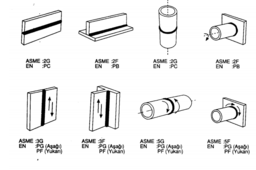
A Technical Review on Weld Joint Preparation Designs, Welding Processes, and Welding Positions
Aygün Karaköse
in
Theory
0
0
Intermediate
Welding is an indispensable joining method in modern manufacturing and construction. The quality of a welded joint is influenced not only by the welder’s skill but also by the proper selection of the welding process, welding position, and most critically, the weld joint preparation. The geometry of the joint preparation directly affects the penetration depth, heat distribution, weld metal behavior, and the presence of welding defects. This paper presents a technical review of weld joint designs, welding process classifications, and welding positions in accordance with EN ISO 9692 series, EN ISO 4063, and EN ISO 6947 standards.
weldingengineer
weld