Learn about the GrabCAD Platform
Get to know GrabCAD as an open software platform for Additive Manufacturing
Visit our new homepage
Home
Control
Shop
Streamline Pro
Partner Program
Print
Community
Accedi
Library
Challenges
Groups
Questions
Tutorials
Engineers
Blog
Accedi
Learn from thousands of free Tutorials.
New user?
Join the community
or
log in.
Tutorials
Most liked all time
Recent
Most liked
Most viewed
Most commented
This week
This month
All time
Category
Design & CAD
Modeling
Drafting
Assemblies
BOM
Dimensioning / Tolerancing
Translations
Manufacturing & CAM
3D Printing
Tooling
NC Machining
Composites
Measurement / Inspection
Simulation & CAE
FEM
CFD
Kinematics
Process Simulation
Engineering Fundamentals
Theory
Process
Standards
Other
Software
Snagit
Alibre Design
ArchiCAD
AutoCAD
AutoCAD Electrical
Autodesk 3ds Max
Autodesk Alias
Autodesk Inventor
Autodesk Maya
Autodesk Revit
Autodesk 123D
BricsCAD
Bentley MicroStation
BlenderCAD
BobCAD-CAM
CATIA
Delmia
DraftSight
FreeCAD
Femap
Fusion 360
Geomagic Design
IronCAD
JT
Kompas-3D
KeyCreator
KeyShot
Lagoa
Luxology
Mastercam
Moi3D
NX Unigraphics
OBJ
Onshape
OpenSCAD
Parasolid
Powermill
Powershape
Pro/Engineer Wildfire
PTC Creo Parametric
PTC Creo Elements
Rhino
SpaceClaim
SOLIDWORKS
solidThinking Evolve
Solid Edge
SolidFace
STEP / IGES
SketchUp
STL
TopSolid
TinkerCAD
T-Flex CAD
TurboCAD
VectorWorks
ViaCAD 3D
VRML / WRL
ZW3D
GrabCAD Print
Rendering
GrabCAD Community
GrabCAD Workbench
Text file
3D Manufacturing Format
Cinema 4D
Other
Skill level
All levels
Beginner
Intermediate
Expert
Modeling
×
ZW3D
×
Other
×
3D_Modeling_In_NX-CAD_EXE _1
Rakesh Verma
in
Modeling
1
0
Intermediate
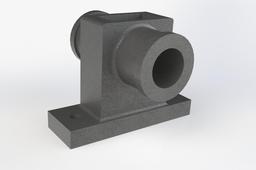
Greetings !!! this is my first tutorial on NX-CAD part modeling. I explained step-by-step modeling of this component. I hope you like it.
Other
cad
nx
Making long trousers Substance painter 3
fernando gonzalez
in
Modeling
1
0
Intermediate
final part of this video tutorial series, i´ll create the textures of the model
Other
tutorial
painter
substance
texturing
Q-BLADE Tutorials for beginners | Airfoil open-end ERROR | FIXED
Sijo Varghese
in
Modeling
1
0
Beginner
Q-BLADE Tutorials for beginners | Airfoil open-end ERROR | FIXED FIXED! Open-end in Airfoil using Qblade a Freeware! Do complex turbine blade simulations in minutes.
Other
learncatia
catiav5
tutorial
varghese
sijo
design
airfoil
qblade
How to Design Nefertiti Bust using Free AI Tool
The Savvy Engineer
in
Modeling
1
0
Beginner
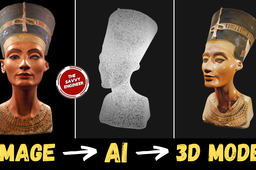
Using Krea AI to design the Nefertiti Bust is an innovative way to merge ancient artistry with the intelligence of modern design technology. The original Nefertiti Bust is one of the most celebrated sculptures in human history, admired for its flawless proportions, elegance, and cultural significance. Reimagining or recreating it with Krea AI allows artists, designers, and learners to explore how artificial intelligence can preserve, reinterpret, and enhance historical art in the digital era.
Other
bust
free ai tool
nefertiti bust
nefertiti
Corel draw in CNC .
Mohamed E.shoman
in
Modeling
1
1
Intermediate
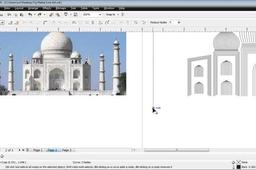
This course qualifies you to make technical and engineering designs in the field of two-dimensional (2D) drawing using one of the most famous design programs, which is (Corel Draw x7). - You will be trained to use different design tools to make the target design through: Learning and training on basic tools. Training on the most important and greatest advantages of the program of engineering tools and many characteristics aimed at understanding and designing in more than one field. Training on using one of the implementation programs in the field of CNC lasers to make a wooden product on the laser machine. Training on using one of the implementation programs in the field of CNC plasma to make a metal product on the plasma machine.
Other
machines
uae
egypt
lasercutting
design
cnc
corel
laser
What steps are needed to make a design?
Eren Keskin
in
Modeling
1
0
Beginner
Design is a planned process by which a product or system is created to fulfill a specific purpose or function. This process involves a process of planning and thinking to solve a problem, meet a need, or achieve a goal. Design is often used to determine how a product or system will look, how it will work, and how it will be produced. The following steps are generally followed when designing: 1. **Problem Identification**: At the beginning of the design process, a specific problem or need is identified. This helps determine the core problem on which the design will focus. 2. **Research and Analysis**: After the problem is determined, research is carried out through steps such as examining similar designs, market research and analysis of user needs. This stage helps develop the knowledge and understanding required for design. 3. **Identifying Needs**: It is important to identify users' needs, design requirements, and constraints. This helps you understand what features the design must have and what constraints it is subject to. 4. **Concept Development**: Once the needs are identified, different design concepts or approaches are created. At this stage, the focus is on discovering and evaluating different ideas and solution proposals. 5. **Design Development**: The best concepts are selected and developed in detail. At this stage, the details of the design are determined, material selection is made, dimensions are determined and other technical details are worked on. 6. **Prototyping and Testing**: A prototype of the design is created and tested. This allows you to understand how the design will work in the real world and make improvements if necessary. 7. **Design Implementation**: The design that passes the tests is passed on to the production process and the final product is created. The design process often has a cyclical nature, with each stage providing opportunities to receive feedback and revise the design when necessary. In this way, the design is constantly improved and optimized.
Other
what steps are needed to make a design
ZW3D Tutorial - Surface Modelling - Beginner level - Exercise 1
CAD Thinkers
in
Modeling
1
0
Beginner
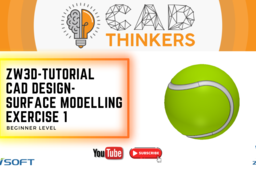
Elements used in 3D environment is as follow: - Shape Tab: Sphere - Wireframe Tab: Project to Face - Free Form Tab: Trim to Curve - Free Form Tab: Conic Bi Rail - Shape Tab: Fillet Elements used in all sketches are as follow: - Draw/Line - Angular Dimension - Reference - Draw/Line - One touch trim - Offset Thanks for watching. --------------------------------------------------------------------------- For more information on ZW3D, please visit : https://www.zwsoft.com/ ---------------------------------------------------------------------------- You can also follow Cad Thinkers at: Instagram: https://www.instagram.com/cadthinkers/ Facebook : https://www.facebook.com/CADThinkers/ Twitter: https://twitter.com/CadThinkers Pinterest: https://www.pinterest.pt/cadthinkers/ GrabCad: https://grabcad.com/cad.thinkers-1
ZW3D
3dcad
cad
cadtutorial
zw3dtutorial
zw3d
surfacemodelling
3dcadmodelling
ZW3D Tutorial - Surface Modelling - Beginner level - Exercise 2
CAD Thinkers
in
Modeling
1
0
Beginner
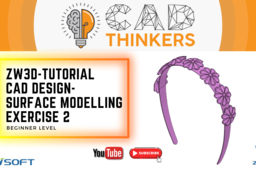
Elements used in 3D environment is as follow: - Datum Plane - Shape Tab: Extrude - Shape Tab: Draft - Shape Tab: Revolve - Free Form Tab: Trim to Curve - Free Form Tab: Pattern - Free Form Tab: Sew - Shape Tab: Thicken - Shape Tab: Fillet - Shape Tab: Add Shape Elements used in all sketches are as follow: - Circle - Draw/Line (Construction line) - Angular Dimension - Constrains - Arc - Offset - Mirror - Pattern - Fillet Chain - Spline - One touch trim Thanks for watching. --------------------------------------------------------------------------- For more information on ZW3D, please visit : https://www.zwsoft.com/ ---------------------------------------------------------------------------- You can also follow Cad Thinkers at: Instagram: https://www.instagram.com/cadthinkers/ Facebook : https://www.facebook.com/CADThinkers/ Twitter: https://twitter.com/CadThinkers Pinterest: https://www.pinterest.pt/cadthinkers/ GrabCad: https://grabcad.com/cad.thinkers-1
ZW3D
3dcadmodelling
surfacemodelling
zw3d
zw3dtutorial
cadtutorial
cad
3dcad
ZW3D Tutorial - Surface Modelling - Beginner level - Exercise 3
CAD Thinkers
in
Modeling
1
0
Beginner
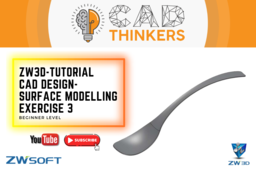
Elements used in all sketches are as follow: - Draw/Line (Construction line) - Dimension - Constrains - Arc - Spline - Mirror - Reference (Intersection) Elements used in 3D environment is as follow: - Datum Plane - Shape: Extrude - Wireframe: Project to Face - Free Form: Curve Mesh - Shape: Thicken - Shape: Fillet Thanks for watching. ----------------------------------------------------------------------- For more information on ZW3D, please visit : https://www.zwsoft.com/ ------------------------------------------------------------------------ You can also follow Cad Thinkers at: Instagram: https://www.instagram.com/cadthinkers/ Facebook : https://www.facebook.com/CADThinkers/ Twitter: https://twitter.com/CadThinkers Pinterest: https://www.pinterest.pt/cadthinkers/ GrabCad: https://grabcad.com/cad.thinkers-1
ZW3D
3dcad
cad
cadtutorial
zw3dtutorial
zw3d
surfacemodelling
3dcadmodelling
modeling
ZW3D Tutorial - Surface Modelling - Beginner level - Exercise 7
CAD Thinkers
in
Modeling
1
0
Beginner
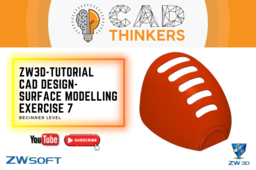
Elements used in all sketches are as follow: - Line - Arc - Dimension - Constraints - Elipse - Power Trim - Circle - Reference Elements used in 3D environment is as follow: - Datum Plane - Shape: Mirror - Free Form: Curve Mesh - Wireframe: Line - Free Form: N-Sided - Shape: Fillet - Free Form: Trim to Faces - Shape: Thicken - Shape: Extrude/Remove Thanks for watching. --------------------------------------------------------------- For more information on ZW3D, please visit : https://www.zwsoft.com/ ---------------------------------------------------------------- You can also follow Cad Thinkers at: Instagram: https://www.instagram.com/cadthinkers/ Facebook : https://www.facebook.com/CADThinkers/ Twitter: https://twitter.com/CadThinkers Pinterest: https://www.pinterest.pt/cadthinkers/ GrabCad: https://grabcad.com/cad.thinkers-1
ZW3D
modelling
cadmodelling
3dcad
cadtutorial
zw3dtutorial
zw3d
surfacemodelling
3dcadmodelling
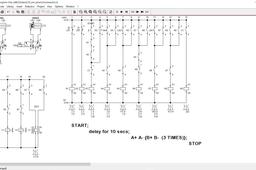
Electro-Pneumatic Tutorial: A+ A- B+ B- with Timer and Counter
Martinus Bagus Wicaksono
in
Modeling
1
0
Intermediate
This video guides us on how to design an electro-pneumatic system. The sequence of the system will be START; DELAY 10 SEC.; A+ A- {B+ B- (3 TIMES)}; STOP. The system was designed by using FluidSIM V4.2.
Other
festo pneumatic
festo
fluidsim tutorial
pneumatic tutorial
electro-pneumatic tutorial
electro-pneumatic
pneumatic
fluidsim
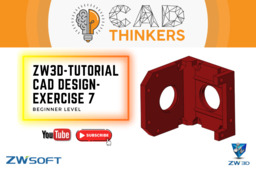
ZW3D Tutorial - Beginner level - Exercise 6
CAD Thinkers
in
Modeling
1
0
Beginner
Exercise 7 - Beginners - Sketch and tools within the sketch environment such as: - Circles - Lines & Double lines - Sketch shapes: Rectangle - Chamfer - Dimensions - Constraints - Curve List - Extrude - Chamfer - Fillet Thanks for watching. --------------------------------------------------------------------------- For more information on ZW3D, please visit : https://www.zwsoft.com/ ---------------------------------------------------------------------------- You can also follow Cad Thinkers at: Instagram: https://www.instagram.com/cadthinkers/ Facebook : https://www.facebook.com/CADThinkers/ Twitter: https://twitter.com/CadThinkers Pinterest: https://www.pinterest.pt/cadthinkers/ GrabCad: https://grabcad.com/cad.thinkers-1
ZW3D
3dcad
3dcaddesign
3dcadmodelling
zw3dtutorial
cadtutorial
cad
cadcam
zw3d
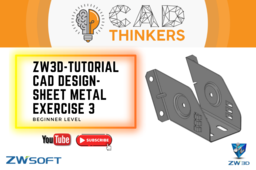
ZW3D Tutorial - Sheet Metal - Beginner level - Exercise 3
CAD Thinkers
in
Modeling
1
2
Beginner
Sheet Metal Exercise 3 - Beginners In this beginner video I will not look into the K-Factor. - Sketch and tools within the sketch environment such as: - Line - Slot - Offset - Point - Trim/Extend - Dimensions - Constraints - Extrude - Flange - Hole - Draft - Fillet - Chamfer - Punch - Mirror Thanks for watching. --------------------------------------------------------------------------- For more information on ZW3D, please visit : https://www.zwsoft.com/ ---------------------------------------------------------------------------- You can also follow Cad Thinkers at: Instagram: https://www.instagram.com/cadthinkers/ Facebook : https://www.facebook.com/CADThinkers/ Twitter: https://twitter.com/CadThinkers Pinterest: https://www.pinterest.pt/cadthinkers/ GrabCad: https://grabcad.com/cad.thinkers-1
ZW3D
sheetmetal
3dcaddesign
3dcadmodelling
zw3dtutorial
cadtutorial
cad
zw3d
3dcad
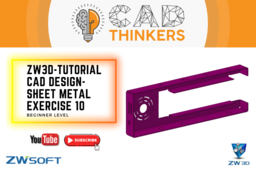
ZW3D Tutorial - Sheet Metal - Beginner level - Exercise 10
CAD Thinkers
in
Modeling
1
0
Beginner
Sheet Metal Exercise 10 - Beginners In this beginner video I will not look into the K-Factor. I will leave k-Factors or Bend Allowance for a later stage when we start designing real world objects. *Elements used in all sketches are as follow:* - Draw/Line - Constraints - Dimensions - Circle - Offset - Power trim - One touch trim - Circular pattern - Point - Rectangle feature *Elements used in 3D environment is as follow:* - Extrude/Remove - Full flange - Parcial Flange - Hole Thanks for watching. --------------------------------------------------------------------------- For more information on ZW3D, please visit : https://www.zwsoft.com/ ---------------------------------------------------------------------------- You can also follow Cad Thinkers at: Instagram: https://www.instagram.com/cadthinkers/ Facebook : https://www.facebook.com/CADThinkers/ Twitter: https://twitter.com/CadThinkers Pinterest: https://www.pinterest.pt/cadthinkers/ GrabCad: https://grabcad.com/cad.thinkers-1
ZW3D
sheetmetal
3dcaddesign
3dcadmodelling
zw3dtutorial
cadtutorial
cad
zw3d
3dcad
Autodesk- Recap Pro Tutorial
Interactive CAD & Tech (Chris)
in
Modeling
1
0
Beginner
his video is a basic tutorial of how to look at 3D point clouds using Autodesk Recap Pro. Covered In This Video - Viewing The Scan - Manipulating Views - Measurements
Other
scans
3d
pro
recap
autodesk
1
2
3
4
5
…
10