Learn about the GrabCAD Platform
Get to know GrabCAD as an open software platform for Additive Manufacturing
Visit our new homepage
Home
Control
Shop
Streamline Pro
Partner Program
Print
Community
Log in
Library
Challenges
Groups
Questions
Tutorials
Engineers
Blog
Log in
Learn from thousands of free Tutorials.
New user?
Join the community
or
log in.
Tutorials
Most liked all time
Recent
Most liked
Most viewed
Most commented
This week
This month
All time
Category
Design & CAD
Modeling
Drafting
Assemblies
BOM
Dimensioning / Tolerancing
Translations
Manufacturing & CAM
3D Printing
Tooling
NC Machining
Composites
Measurement / Inspection
Simulation & CAE
FEM
CFD
Kinematics
Process Simulation
Engineering Fundamentals
Theory
Process
Standards
Other
Software
Snagit
Alibre Design
ArchiCAD
AutoCAD
AutoCAD Electrical
Autodesk 3ds Max
Autodesk Alias
Autodesk Inventor
Autodesk Maya
Autodesk Revit
Autodesk 123D
BricsCAD
Bentley MicroStation
BlenderCAD
BobCAD-CAM
CATIA
Delmia
DraftSight
FreeCAD
Femap
Fusion 360
Geomagic Design
IronCAD
JT
Kompas-3D
KeyCreator
KeyShot
Lagoa
Luxology
Mastercam
Moi3D
NX Unigraphics
OBJ
Onshape
OpenSCAD
Parasolid
Powermill
Powershape
Pro/Engineer Wildfire
PTC Creo Parametric
PTC Creo Elements
Rhino
SpaceClaim
SOLIDWORKS
solidThinking Evolve
Solid Edge
SolidFace
STEP / IGES
SketchUp
STL
TopSolid
TinkerCAD
T-Flex CAD
TurboCAD
VectorWorks
ViaCAD 3D
VRML / WRL
ZW3D
GrabCAD Print
Rendering
GrabCAD Community
GrabCAD Workbench
Text file
3D Manufacturing Format
Cinema 4D
Other
Intermediate
All levels
Beginner
Intermediate
Expert
parametric
×
Using Blender for Technical design
Christie S
in
Modeling
22
2
Intermediate
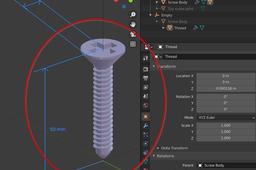
Blender 3D may seem for non-user quite difficult to approach, and yet there are a lot of ways to use it accuratly with measures and tree function structure. This tutorial will design a precise screw. It is a near way of approaching technical design. Yes, it will not be as quite easy as solidwork or others, but the aim is to be more precise with blender.
BlenderCAD
precise
drawing
parametric
accurate
Using Advanced Blend Option in Creo Parametric
jehan kothari
in
Modeling
18
2
Intermediate
The video shows complete 2d to 3d Modeling as well as advanced use of loft option
PTC Creo Parametric
tutorial
advanced
tangent
blend
parametric
creo
Параметризация модели через переменные в "Компас-3D"
Egor Chugay
in
Modeling
14
0
Intermediate
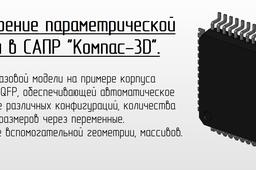
Tutorial relevant for users "Kompas-3D". I don't know if they "Kompas-3D" is used in other countries, but I know "Kompas-3D" most popular in Russia, so further explanation will be in Russian. If you need English version, please comment tutorial, and I make translate. В данной заметке рассмотрено построение параметрической модели на примере корпуса микросхем типа QFP, модель строится в САПР «Компас-3D». Представленный ниже способ - лишь один из многих возможных. И я искренне надеюсь, что кому-то он поможет лучше разобраться 3D моделированием, а кто-то увидит, как оптимизировать процесс. Несмотря на то, что построение модели выполнялось в «Компас-3D», подобные механизмы могут присутствовать и в иных системах, так что возможно пригодится пользователям другого ПО. Описанный ниже способ предполагает наличие определенного навыка работы с 3D моделями, и не содержит подробного описания последовательностей нажатия клавиш, скорее описана методика построения и взаимосвязь объектов.
Kompas-3D
qfp
tutorial
parametric
kompas-3d
Create a Simple Nut By Using PTC Creo Parametric 3.0
Yash Lad
in
Modeling
14
3
Intermediate
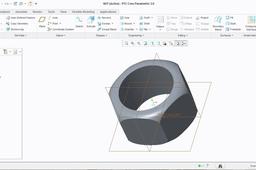
How to create a simple nut in PTC Creo Parametric 3.0 ???
PTC Creo Parametric
1-0
2-0
3-0
sketch
round
hole
extrude
3d
nut
parametric
creo
ptc
Part View Labels with BOM item number
PRO
in
BOM
13
2
Intermediate
Set Your Drawing View Labels to Use BOM item numbers.
Autodesk Inventor
parametric
parame
part
number
item
label
view
bom
Parametric Design in CATIA V5
Aria Djavid
in
Modeling
13
5
Intermediate
Hi guys, I've just launched a new course on PARAMETRIC DESIGN in CATIA. I know lots of you looking for a complete tutor on this subject for a long time. Here is the link to my course: https://www.udemy.com/catia-v5-parametric-design/ It's comprehensive course with multiple examples so if you are interested just give it a try.
CATIA
tutorial
v5
catia
design
parametric
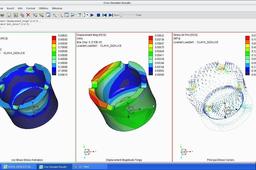
Tutorial: Creo Simulate
Milan Ilić
in
Design & CAD
12
1
Intermediate
Creo Simulate
PTC Creo Parametric
tutorial
simulate
enginner
pro
parametric
creo
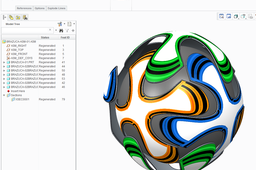
Tutorial: How to create a (soccer) football like the never-before-seen Brazuca!
bj
in
Design & CAD
10
0
Intermediate
The Adidas Brazuca is the official match ball of the 2014 FIFA World Cup which will be held in Brazil. Interesting design which seems to have been built up of six panels, so why not create a CAD model to puzzle-out how this works!
PTC Creo Parametric
cup
creo
parametric
soccer
football
world
2014
brazuca
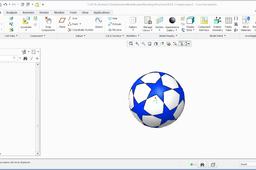
Tutorial: How to make a ball UEFA Champions League
Milan Ilić
in
Design & CAD
9
0
Intermediate
how to make a ball UEFA Champions League ?
PTC Creo Parametric
tutorial
video
make
league
champions
mafia
uefa
ball
enginner
pro
parametric
creo
Iris Mechanism Generator (Variant 6)
Carlos Bravo
in
Modeling
9
1
Intermediate
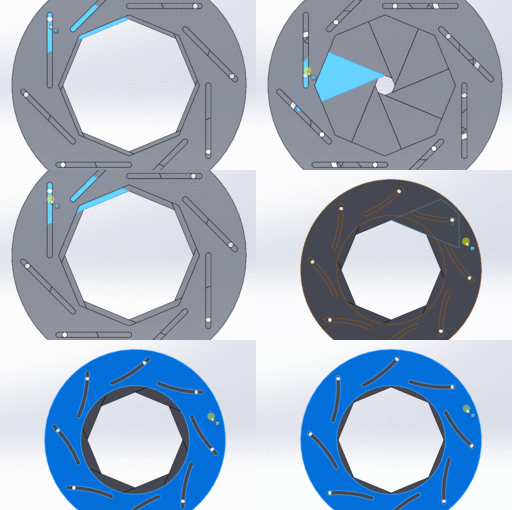
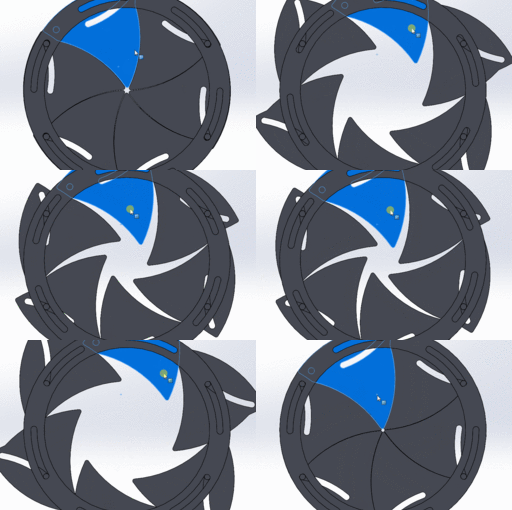
This model is part of a series of Iris Mechanisms I began designing during the pandemic, and it now receives an update after several years. The original model uploaded a few years ago is available here: 🔗 https://grabcad.com/library/iris-generator-model-5-1 Unfortunately, due to GrabCAD’s community policies, it has been flagged as “tainted due to a violation of community guidelines” and is no longer publicly visible unless accessed directly. 🛠️ About this Variant This version features somewhat triangular leaves that slide against each other. The mechanism operates through two plates: A base plate with straight linear guides, which define the opening/closing position of each leaf A driving plate with curved slots, which actuate the iris motion through controlled displacement This model is a schematic representation, so any manufacturing considerations—such as tolerances between pins and slots—are left to the discretion of the designer using this as a starting point. ⚙️ Notes Be sure to open the assembly file, as the parts are dimensionally linked to the assembly (parametric relationships are defined there). Feel free to use or modify this model however you'd like. (Let’s hope GrabCAD doesn’t flag this one again 😅)
SOLIDWORKS
parametric
mechanism
equations
Iris Mechanism Generator (Variant 5)
Carlos Bravo
in
Modeling
7
0
Intermediate
This model is part of a series of Iris Mechanisms I began designing during the pandemic, and it now receives an update after several years. The original model uploaded a few years ago is available here: 🔗 https://grabcad.com/library/iris-generator-model-3-1 Unfortunately, due to GrabCAD’s community guidelines, it has been flagged as “tainted due to a violation of community guidelines” and is no longer publicly visible unless accessed via direct link. 🛠️ About this Variant In this version, the actuation is achieved by rotating the driving plate. This plate interacts with slots (guides) on each leaf, which in turn execute the opening or closing of the iris. The mechanism has been successfully tested with 4 to 7 leaves, though I do not recommend using only 4, as the slot approaches too close to the edge of the plate. Suggested maximum opening angles (r_max) are: 4 leaves → up to 45° 5–6 leaves → around 40° to 35° 7 leaves → up to 30° Please review the model carefully and test parameters cautiously before applying them in a final design. ⚙️ Notes Open the full assembly file, as part dimensions and parameters are linked directly to it via parametric references. Feel free to use or modify this model as you see fit. (And fingers crossed GrabCAD doesn’t report it again 😅)
SOLIDWORKS
mechanism
parametric
equations
Iris Mechanism Generator (Variant 2)
Carlos Bravo
in
Modeling
6
0
Intermediate
This model is part of a series of Iris Mechanisms I began designing during the pandemic, and it now receives an update after several years. The original model uploaded a few years ago is available here: 🔗 https://grabcad.com/library/iris-generator-model-2-1 Unfortunately, due to GrabCAD’s community policies, it has been flagged as “tainted due to a violation of community guidelines” and is no longer publicly visible unless accessed directly. 🛠️ About this Variant This version features flexible leaves that overlap each other and are inspired by this YouTube post: 🔗 https://www.youtube.com/watch?v=tkaN07fCG3w Unlike other iris designs with rigid pivots or sliding slots, this variant proposes a softer, layered motion between blades. The number of leaves is calculated automatically depending on the dimensions of the mechanism, particularly the inner and outer radius. This model includes three different configurations, each with a distinct leaf width (r_ext_blade). The shape of each leaf is defined by a sketch that can be easily modified to suit your application. Each leaf requires two pivot points: - One at the base, to enable revolute rotation - Another at the tip, to connect with a sliding mechanism (a slotted guide or equivalent linkage) 🔁 Important: Due to how SolidWorks handles the blade instances in the assembly, they don’t appear in their final stacked order. Make sure to assemble them physically following the correct sequence for proper motion. ⚙️ Notes Be sure to open the assembly file, as the parts are dimensionally linked to the assembly (parametric relationships are defined there). Feel free to use or modify this model however you'd like. (Let’s hope GrabCAD doesn’t flag this one again 😅)
SOLIDWORKS
equiation
parametric
mechanism
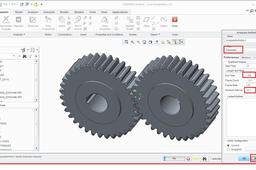
Tutorial on Modeling and Simulation of standard gear
Milan Ilić
in
Design & CAD
6
1
Intermediate
Tutorial on Modeling and Simulation of standard gear...
PTC Creo Elements
gear
standard
simulation
tutorial
engineer
pro
parametric
creo
Iris Mechanism Generator (Variant 1)
Carlos Bravo
in
Modeling
6
1
Intermediate
This is another variant from my Iris Mechanism Series, which I originally started designing back during the pandemic—and now, after several years, it receives a much-needed update. The original model I uploaded a few years ago was: 👉 https://grabcad.com/library/iris-generator-model-1-1 However, it was unfortunately marked as "tainted due to a violation of community guidelines" by GrabCAD. This variant uses flexible overlapping blades, inspired in part by this post: 🔗 https://www.instructables.com/Mechanical-Iris-Card-Improved/ In this design: - The number of blades is calculated automatically based on the thickness of the base plate. - There are a few geometric constraints: the inner radius must be smaller than the outer radius, and the maximum supported configuration is when the outer radius is exactly twice the inner radius. The blade shape provided is just a draft, so feel free to customize it to your needs. Use the sketch as a starting point, and modify it to suit your aesthetic or functional goals. ⚠ Note: Be sure to open the full assembly, as all blade dimensions and positions are driven by equations and references from the assembly itself. Feel free to use or adapt this model however you like! (And hopefully, GrabCAD won’t flag this one again 😅)
SOLIDWORKS
mechanism
equation
parametric
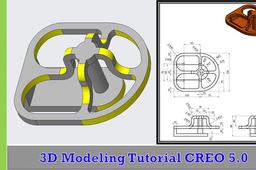
3d Modeling Tutorial for Creo Parametric
jehan kothari
in
Modeling
5
0
Intermediate
In this video, you will come across a very good modeling strategy as well as drawing reading. That also includes using revolve, extrude and full round features :)
PTC Creo Parametric
2d
advanced
modeling
3d
parametric
creo
1
2
3
…
6