Learn about the GrabCAD Platform
Get to know GrabCAD as an open software platform for Additive Manufacturing
Visit our new homepage
Home
Control
Shop
Streamline Pro
Partner Program
Print
Community
Log in
Library
Challenges
Groups
Questions
Tutorials
Engineers
Blog
Log in
Learn from thousands of free Tutorials.
New user?
Join the community
or
log in.
Tutorials
Most liked all time
Recent
Most liked
Most viewed
Most commented
This week
This month
All time
Category
Design & CAD
Modeling
Drafting
Assemblies
BOM
Dimensioning / Tolerancing
Translations
Manufacturing & CAM
3D Printing
Tooling
NC Machining
Composites
Measurement / Inspection
Simulation & CAE
FEM
CFD
Kinematics
Process Simulation
Engineering Fundamentals
Theory
Process
Standards
Other
Software
Snagit
Alibre Design
ArchiCAD
AutoCAD
AutoCAD Electrical
Autodesk 3ds Max
Autodesk Alias
Autodesk Inventor
Autodesk Maya
Autodesk Revit
Autodesk 123D
BricsCAD
Bentley MicroStation
BlenderCAD
BobCAD-CAM
CATIA
Delmia
DraftSight
FreeCAD
Femap
Fusion 360
Geomagic Design
IronCAD
JT
Kompas-3D
KeyCreator
KeyShot
Lagoa
Luxology
Mastercam
Moi3D
NX Unigraphics
OBJ
Onshape
OpenSCAD
Parasolid
Powermill
Powershape
Pro/Engineer Wildfire
PTC Creo Parametric
PTC Creo Elements
Rhino
SpaceClaim
SOLIDWORKS
solidThinking Evolve
Solid Edge
SolidFace
STEP / IGES
SketchUp
STL
TopSolid
TinkerCAD
T-Flex CAD
TurboCAD
VectorWorks
ViaCAD 3D
VRML / WRL
ZW3D
GrabCAD Print
Rendering
GrabCAD Community
GrabCAD Workbench
Text file
3D Manufacturing Format
Cinema 4D
Other
Intermediate
All levels
Beginner
Intermediate
Expert
OBJ
×
Solid Edge
×
Rendering
×
Other
×
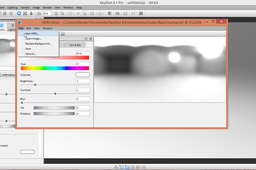
How to create an environment in keyshot by yourself?
Jitender Chaurasia (JittuARTS)
in
Design & CAD
3
0
Intermediate
You can make your own environment by editing your HDRI
Rendering
environment
keyshot
rendering
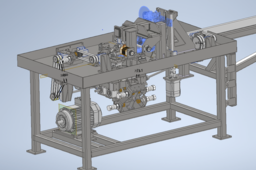
Project implementation
Võ Mạnh Trường
in
Assemblies
3
1
Intermediate
Basic process to carry out a mechanical project - Design and manufacturing standards: Related standards from ISO
Other
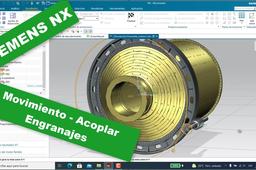
Siemens NX motion simulation | acoplamiento engranajes
Bruno Peña
in
Modeling
3
0
Intermediate
Build3Design - Analysis and Design on mechanical engineering: Hola amigos, en esta ocasión vamos a realizar una simulación del movimiento cinemático entre un piñón y su corona perteneciente a un molino SAG, para ello utilizaremos la función acoplar. -------------------------------------------------------------------------------------- For any question please contact us on: bruno.pemore@gmail.com --------------------------------------------------------------------------------- Thanks for subscribe and share --------------------------------------------------------------------------------- Cuéntame tu experiencia, comenta si te hizo útil esta herramienta y como lo aplicas en tus diseños. ♥ ¿Te ha gustado este vídeo? Suscríbete, comparte con tus amigos para que más gente tenga la información libre para todos, y ayúdame a seguir publicando más material y llegar a los 1K suscriptores y podamos ser una comunidad que apasiona el diseño CAD y CAE. Saludos
Other
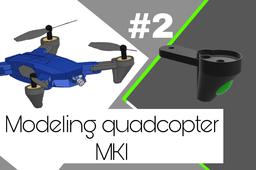
Modeling quadcopter MKI(#2leg)
Amir Nouri
in
Modeling
3
0
Intermediate
*Part 2*Learn how to model quadcopter propeller on shaper 3d app For more tutorials follow my YouTube account
Other
autocad
modulardesign
fpv
solidwork
modeling
drone
shaper3d
quadcopter
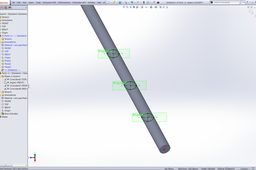
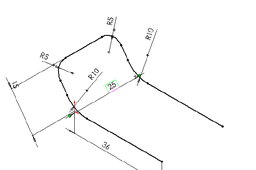
How to create a pipe 3d in Solidworks ?
Altug Tuncel
in
Design & CAD
3
0
Intermediate
example drawing
Other
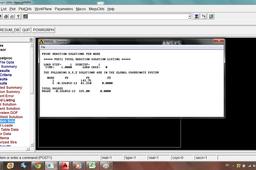
How to do analysis of universal coupling using ansys
harikrushna dodiya
in
Design & CAD
3
1
Intermediate
By following way u can do
Other
static
analysis
ansys
coupling
universal
joint
Solid Edge import files with vertex colour
juergen grewe
in
Modeling
3
0
Intermediate
How to create and import files into Solid Edge with vertex colour. With this little tutorial, it is possible to import into Solid Edge (2020) files that had before texture and mesh. For this you need Mesh Lab, TCvis (Teamcenter) or PLMvis and Solid Edge (2020). In Mesh Lab you can import every file it can read and export it to WRL (VRML).
Solid Edge
export
import
jt
teamcenter
plmvis
tcvis
edge
solid
3D Modeling and Animation of a Soldier in DAZ Studio - Part I
Yoana Ivanova
in
Modeling
2
0
Intermediate
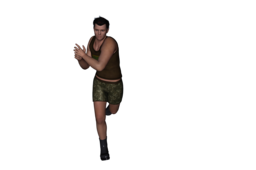
The aim of the practice is to use the capabilities of the software to create realistic 3D models of characters. The main steps are as follows: 1. A selection of „Interface Layouts”: from Window > Workspace > Select Layout > „Hollywood Blvd”. "Hollywood Blvd" includes several activities ("Activities"), initially starting with the first - Actors, Wardrobe & Props. The Smart Content Pane opens and then select Files. 2. Place a character in the scene: from Files > Figures > Creatures/People. After selecting the desired character, it is placed in the workspace (Viewport) by dragging (with the left mouse button pressed) or double-clicking. In this example the model selected is Genesis 8 Basic Male. 3. A selection of clothing and accessories: from Files > Wardrobe. If a change is required subsequently, it is necessary to select that part of the clothing to be deleted. This is done using the Surface Selection Tool and then press Delete. 4. Fitting the clothing: it is necessary to make a correction if the clothing does not cover the body properly when it is directly placed on the model. This part ot the clothing is selected and from the panel on the right select Fit to and press the None button. In the window that appears, select Genesis 8 Male from the drop-down menu and press the Accept button. If an Auto-Fit:... window appears, it is necessary to specify for which model the specific garment is originally intended. There is an option to select just a piece of clothing and click on Parameters, from where the size and position of the selected item can be edited precisely using the Scale and Translate options. A similar procedure is used when parts of the character's body (hair, facial features, body structure) need to be edited. 5. A transformation of the base model: it is necessary to select the entire model with the clothing using Region Navigator Tool. The base model can be transformed with help from Actor, Wardrobe & Props For this purpose, Editor and Shaping must be active. 6. Rendering the scene: use the editor (Editor), which is located in the right panel. If the software is installed on a computer with a 64-bit version of Windows, then it can work with Engine: NVIDIA Iray (not supported on a 32-bit version). Select Render > Editor: Render Mode > Photoreal/ Interactive and then click the Render button and select a graphic file format.
Other
soldier animation
soldier
character animation
character modeling
daz studio
how to model from image in Autodesk inventor
Jesus Meneses
in
Design & CAD
2
0
Intermediate
Here's how.
Other
Which Software is better for Computational Fluid Dynamics? ANSYS (or) NASTRAN?
harikrushna dodiya
in
Design & CAD
2
0
Intermediate
ANSYS. Because ANSYS user interface is very good by ANSYS 17 they improve algorithm for solving, so solving time is also very less so i suggest u go for ansys. for ANSYS readily many tutorial is also available in YouTube. try it.
Other
how to design and analysis t beam welding in ansys?
harikrushna dodiya
in
Design & CAD
2
0
Intermediate
u can weld through following step in workbench There are one "WELD" option in geometry. there u can create weld
Other
Steel stairs parametric design overview
Ruben Medina
in
Modeling
2
0
Intermediate
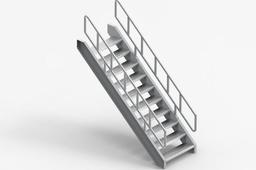
Quick overview of Solid Edge and Excel integration for parametric design using steel stairs as example.
Solid Edge
stairs
frame
metal
sheet
variables
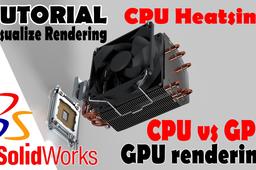
SolidWorks Visualize tutorial CPU Heatsink GPU vs CPU rendering test
ioan skurka
in
Design & CAD
2
0
Intermediate
SolidWorks Visualize tutorial CPU Heatsink CPU vs GPU rendering test: 3D viewport Passes per second and render time, Intel i7 4790K 3x GTX780 TI watercooled Rendering: Learn key techniques and tools to render 3D model Features to be used: Import part, Visualize user interface, Visualize features, apply appearance, environmental, Camera, CPU render, GPU render, Model transform tools in Visualize, How to update Solidworks 3D model into Visualize, edit environmental, edit texture, edit camera, CPU vs GPU rendering test: 3D viewport Passes per second and render time,
Other
vs
cpu
rendering
tutorial
visualize
rendewring
gpu
tutorial 17= TRUSS analysis in ANSYS
Armin Yousefi Kanani
in
Design & CAD
2
1
Intermediate
If you have any questions, don't hesitate to ask me
Other
ansys
Hang Glider wing: How to make a rib's curve tangent to the intersection curve made by a wing's tube penetrating rib's plane?
A D
in
Design & CAD
2
0
Intermediate
You can "cheat" a little bit with "spline on surface" (in a 3D-Sketch) which are connected on the rib plane. The spline should be a closed loop, this will give you a ellipsis. on this sketch can you connect now the rib-sketch. In the zip-file is my experiment.
Other
1
2
3
4
…
12