Learn about the GrabCAD Platform
Get to know GrabCAD as an open software platform for Additive Manufacturing
Visit our new homepage
Home
Control
Shop
Streamline Pro
Partner Program
Print
Community
Log in
Library
Challenges
Groups
Questions
Tutorials
Engineers
Blog
Log in
Learn from thousands of free Tutorials.
New user?
Join the community
or
log in.
Tutorials
Most liked all time
Recent
Most liked
Most viewed
Most commented
This week
This month
All time
Category
Design & CAD
Modeling
Drafting
Assemblies
BOM
Dimensioning / Tolerancing
Translations
Manufacturing & CAM
3D Printing
Tooling
NC Machining
Composites
Measurement / Inspection
Simulation & CAE
FEM
CFD
Kinematics
Process Simulation
Engineering Fundamentals
Theory
Process
Standards
Other
Software
Snagit
Alibre Design
ArchiCAD
AutoCAD
AutoCAD Electrical
Autodesk 3ds Max
Autodesk Alias
Autodesk Inventor
Autodesk Maya
Autodesk Revit
Autodesk 123D
BricsCAD
Bentley MicroStation
BlenderCAD
BobCAD-CAM
CATIA
Delmia
DraftSight
FreeCAD
Femap
Fusion 360
Geomagic Design
IronCAD
JT
Kompas-3D
KeyCreator
KeyShot
Lagoa
Luxology
Mastercam
Moi3D
NX Unigraphics
OBJ
Onshape
OpenSCAD
Parasolid
Powermill
Powershape
Pro/Engineer Wildfire
PTC Creo Parametric
PTC Creo Elements
Rhino
SpaceClaim
SOLIDWORKS
solidThinking Evolve
Solid Edge
SolidFace
STEP / IGES
SketchUp
STL
TopSolid
TinkerCAD
T-Flex CAD
TurboCAD
VectorWorks
ViaCAD 3D
VRML / WRL
ZW3D
GrabCAD Print
Rendering
GrabCAD Community
GrabCAD Workbench
Text file
3D Manufacturing Format
Cinema 4D
Other
Beginner
All levels
Beginner
Intermediate
Expert
polyjet
×
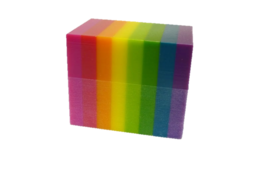
Printing Full-Color FEA Results on 3D Printers
Shuvom Ghose
in
3D Printing
47
7
Beginner
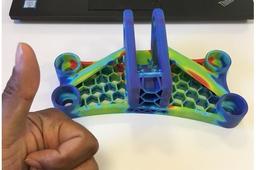
Ever wanted to see, feel, and handle your FEA results in the best way to share them with colleagues and students? This tutorial goes through the steps how to use SOLIDWORKS Simulation and GrabCAD Print to print full-color FEA results on polyjet color printers such as the J750. It's a lot easier than you think!
j55
simulation
solidworks
vrml
polyjet
j750
fea
PolyJet 3D Printing: How to Assign Colors in GrabCAD Print
Stratasys
in
3D Printing
34
3
Beginner
When you import a part into GrabCAD Print and you have color options, it'll default to white. This tutorial teaches you how to apply colors using the improved PolyJet panel and Pantone™ Color Library selection tool. This tutorial is great for users with the Stratasys J55, J8 Series and other PolyJet printers.
j55
3dprinting
grabcadprint
grabcad
stratasys
polyjet
pantone
How to Color Proof Your 3D Prints (Using This Super-Secret Stratasys Website)
Shuvom Ghose
in
3D Printing
33
6
Beginner
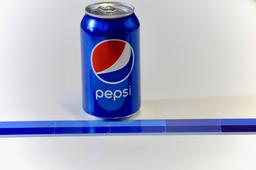
If a customer has ever come to you and said, "I need the color of this 3D print to match this RGB or Pantone EXACTLY!" and you've wondered how to do that – this is the tutorial for you! We'll talk about soft proofing (how to make sure your printer can even print a given color) and hard proofing (matching what you see on screen with a physical result) using Photoshop and the most advanced color printer on the market, a Stratasys J750! (You can find a video version of this tutorial here: https://youtu.be/XsollrDbUVc)
j55
polyjet
rgb
proofing
color
stratasys
photoshop
j750
How to 3D Print in Full Color (Part 1)
Shuvom Ghose
in
3D Printing
32
7
Beginner
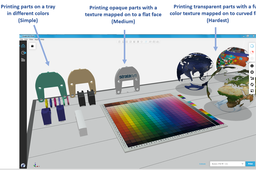
This is a series of tutorials to help printer operators who are NOT graphic artists get the absolute most out of their multi-color, multi-material 3D printers, like the Stratasys J750. We will cover what types of files multi-color printers can accept and how to manipulate colors in Photoshop, Rhino, etc, to get the full gradient texture effects that most color printer users want.
j55
texture
stratasys
printing
color
vrml
j750
polyjet
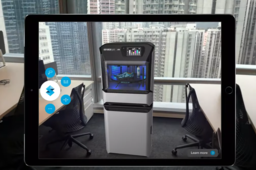
How to Use the Stratasys AR App for the J55 3D Printer
Stratasys
in
3D Printing
28
3
Beginner
Stratasys unveiled the new J55 full-color 3D printer last month. We wanted to give designers and industry professionals a chance to see it for yourself -- wherever you are -- by offering this augmented reality experience.
virtual
apps
polyjet
printers
j55
printing
3d
stratasys
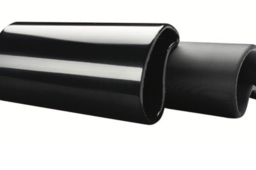
Finishing Options for FDM and PolyJet 3D Printed Parts
Stratasys
in
3D Printing
22
1
Beginner
Finishing or secondary operations encompasses a broad range of processes that change a manufactured part’s properties. Engineers can employ finishing simply to improve part’s appearance and reshape it to meet certain dimensions, or use it to enhance functionality, such as increasing strength, chemical resistance, electrical conductivity and more. Secondary operations basically turn raw parts into finished goods and this isn’t limited to traditional manufactured parts. 3D printed parts can also be enhanced with secondary operations, but much like designing for additive manufacturing, different processes and best practices apply. Throughout the product design and manufacturing process, engineers should also be thinking about how 3D printed parts can be finished. Determining the appropriate finishing operations depends on the additive process, material and geometry as well as the desired aesthetics and functionality. This guide explains the primary finishing operations additive manufacturing service providers implement for FDM and PolyJet 3D printing technologies, grouped by possible finishing objectives, and compatible materials and applicable design considerations.
blasting
sanding
smoothing
stratasys
3dprinting
polyjet
finishing
fdm
STLs and 3D Printing for PolyJet
Naftali Eder
in
3D Printing
21
0
Beginner
This tutorial is the first part of our series about how to prepare and optimize settings for mesh file types supported by GrabCAD Print (GCP). The tutorial explains the building blocks of 3D printing with PolyJet. We will explain the conversion process from a CAD file to an STL file and how to optimize it to achieve the best print results possible. Future tutorials in this series will then explain more advanced types of files and operations.
polyjet
printing
3d
color
obj
vrml
stl
stratasys
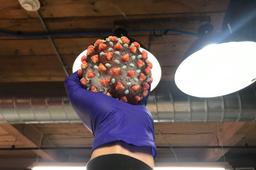
What 3D printing a coronavirus taught me about DFAM and rapid prototyping
Shuvom Ghose
in
3D Printing
20
6
Beginner
A project to visualize the novel coronavirus for a local medical conference. But over the course of our work, we re-learned some important 3D printing principles that EVERYONE can use!
series
j8
j55
medical
stratasys
polyjet
j750
coronavirus
virus
Pre-Printing Tips for Rigid Opaque and Transparent PolyJet Materials
Alexa Nahum
in
3D Printing
13
13
Beginner
This tutorial gives you tips for how to use various rigid materials on Stratasys PolyJet printers. This includes the entire Vero family, as well as the VeroVivids, VeroFlex, VeroClear, and FullCure720 (also known as RGD720). You can truly optimize final results for these materials if you know how to best utilize GrabCAD Print settings for part orientation, printing mode, surface finish, grid style, material selection, tray preparation, and other factors. Below, we will show you how. The information in this tutorial is applicable to GrabCAD Print version 1.32 and above. Older versions may differ slightly.
polyjet
settings
grabcad
vero
fullcure720
veroclear
verflex
verovivid
Pre-printing Tips for Flexible PolyJet Materials
Alexa Nahum
in
3D Printing
13
4
Beginner
PolyJet currently offers a number of flexible materials: Tango and Agilus30 families. This tutorial will provide some tips to optimize the performance of these materials, using the various settings in GrabCAD Print.
surface
orientation
agilus
flexible
materials
polyjet
tango
agilus30
How to REALLY export your color SOLIDWORKS files for printing
Shuvom Ghose
in
3D Printing
11
1
Beginner
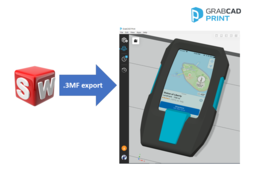
An updated tutorial, showing you the BEST way to export your color SOLIDWORKS files for 3D printing, using the new '3MF' format!
j8
j55
printing
color
stratasys
polyjet
solidworks
3mf
VRML Files for PolyJet
Naftali Eder
in
3D Printing
10
0
Beginner
In our previous tutorial, we defined STLs and explained best practices for using them. In this tutorial, we will explain VRML files and their expanded capabilities beyond basic geometric representation.
nurbs
stratasys
polyjet
3mf
obj
wrl
vrml
stl
Part 1: A Look at Color Proofing
Naftali Eder
in
3D Printing
10
0
Beginner
This tutorial gives some background on color proofing and explains what to do when the color you print doesn't match the color you chose on screen. There will be future tutorials that expand on the topics mentioned here.
GrabCAD Print
polyjet
stratasys
matching
rgb
cmyk
proofing
color
How to Lower Your 3D Printer Material Cost Using this Trick in GrabCAD Print
Stratasys
in
3D Printing
10
0
Beginner
GrabCAD Print has multiple features that allow you to lower your 3D printer material cost, including making parts hallow, optimizing the orientation, and re-scaling. Learn how to apply these options here!
series
j8
j55
j750
polyjet
stratasys
grabcad
grabcadprint
software
Matte or Glossy? Which Finish to Use for Your 3D Prints and When.
Alexa Nahum
in
Modeling
9
0
Beginner
Matte or Glossy? That is the question. PolyJet users often ask themselves whether they should print a part with a matte finish or a glossy finish. And not without reason. The type of finish can totally alter the look, feel, color, and even strength and durability of two otherwise identical parts. Each option has its own benefits and implications that need to be considered. In this tutorial we will give an overview of matte and glossy, compare the pros and cons of each, and offer examples that clearly show what each finish type has to contribute. Finally, we will wrap up with a quick breakdown of when to use what.
GrabCAD Print
polyjet
disadvantages
advantages
cons
pros
support
glossy
matte
1
2
3
4
5