Learn about the GrabCAD Platform
Get to know GrabCAD as an open software platform for Additive Manufacturing
Visit our new homepage
Home
Control
Shop
Streamline Pro
Partner Program
Print
Community
Log in
Library
Challenges
Groups
Questions
Tutorials
Engineers
Blog
Log in
Stratasys
Follow
174
followers
United States
Tutorials
About
Models
11
Tutorials
68
More
Followers
174
Following
1
Likes
1
Following
1
Followers
174
Likes
1
Tutorials
Sort by:
Recent
Recent
Most liked
Most viewed
Most commented
Understanding Design & Process of DMLS 3D Metal Printing
Stratasys
in
3D Printing
14
0
Intermediate
Over the last decade, metal 3D printing has seen significant growth and evolution in the additive manufacturing landscape. Major players like NASA and GE have incorporated additive metals into their programs, aided by industry-wide material development and process research. Additive metal parts are seen more and more in end-use production. This tutorial covers Direct Metal Laser Sintering (DMLS) design constraints and freedoms, available metal materials and the process controls that deliver incredible metal parts.
laser
sdm
dmls
manufacturing
direct
stratasys
3dprinting
metal
Inserting Hardware Post-Build
Stratasys
in
3D Printing
0
0
Intermediate
Various types of hardware are commonly used in plastic parts to withstand the torque and load applied when joining parts to create assemblies. Like machined or molded plastics parts, components made with FDM technology can also have hardware inserted into them. Inserts may be added during an FDM build or in a secondary, post-build operation. This Best Practice covers secondary insertion of hardware with common methods such as adhesive bonding, pressing, and heat setting.
stratasys
finishing
inserts
3dprinting
fdm
post-build
hardward
Vibratory Finishing for Rigid PolyJet Parts
Stratasys
in
3D Printing
2
3
Beginner
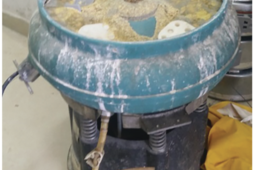
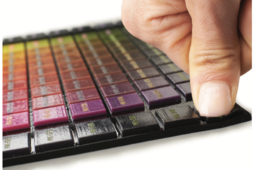
Polishing PolyJetTM 3D Printed parts in a vibratory finishing system (also known as a tumbler) improves their surface finish by removing minor surface irregularities and sharp edges. With this process you can save time and manual labor, especially when dealing with large quantities or complex models. A tumbler system can polish multiple parts, hands-free, in only a few hours, depending on the size of the parts and the tumbler. This method is usually performed on metal parts, but it was tested on PolyJet models from the Digital ABSTM and VeroTM material families and found suitable.
tutorial
tumbler
polishing
stratasys
3dprinting
polyjet
finishing
vibratory
Using PolyJet 3D Printing Technology for Shock Absorption
Stratasys
in
3D Printing
5
0
Beginner
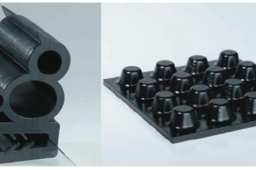
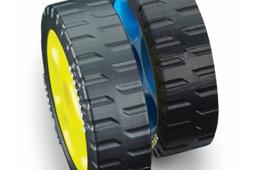
Shock and energy-absorbing components are often used as a safety measure to dissipate runaway energy in case of a component or system failure. Practical examples of shock absorbing components include bumpers, isolators, fasteners, mounts, spacers and pads.
stratasys
3d
3dprinting
polyjet
absorption
shock
Finishing Options for FDM and PolyJet 3D Printed Parts
Stratasys
in
3D Printing
22
1
Beginner
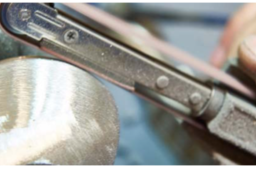
Finishing or secondary operations encompasses a broad range of processes that change a manufactured part’s properties. Engineers can employ finishing simply to improve part’s appearance and reshape it to meet certain dimensions, or use it to enhance functionality, such as increasing strength, chemical resistance, electrical conductivity and more. Secondary operations basically turn raw parts into finished goods and this isn’t limited to traditional manufactured parts. 3D printed parts can also be enhanced with secondary operations, but much like designing for additive manufacturing, different processes and best practices apply. Throughout the product design and manufacturing process, engineers should also be thinking about how 3D printed parts can be finished. Determining the appropriate finishing operations depends on the additive process, material and geometry as well as the desired aesthetics and functionality. This guide explains the primary finishing operations additive manufacturing service providers implement for FDM and PolyJet 3D printing technologies, grouped by possible finishing objectives, and compatible materials and applicable design considerations.
blasting
sanding
smoothing
stratasys
3dprinting
polyjet
finishing
fdm
PolyJet Materials and Uses: Tips and Tricks
Stratasys
in
3D Printing
12
4
Intermediate
Materials are critical to prototyping and production success. At the heart of any great application is the right material: one that performs as needed under the application’s conditions. This is just as true for 3D printing as it has always been for molding, machining, and casting. While the 3D printing industry has a wide variety of materials to choose from, ranging from plastic to metal and wax to paper, the selection is often quite limited for a given technology. It is even more restricted for specific 3D printers, with one exception.
stratasys
3dprinting
materials
polyjet
Successful STL Tips for 3D Printing
Stratasys
in
3D Printing
7
0
Beginner
This document will help 3D printing users ensure their STL files produce successful 3D printed parts. It will help them become familiar with popular manipulation software, gain a basic understanding of how STL files work, learn to fix common STL faults for successful 3D printing and a few additional actions they can perform on an STL to expand their 3D printing options.
stratasys
3dprinting
stl
Fused Deposition Modeling (FDM) Design Guidelines
Stratasys
in
3D Printing
26
0
Beginner
This tutorial is designed to give you a foundation of what to consider when designing and printing a part for Fused Deposition Modeling (FDM). FDM is an additive manufacturing technology that extrudes thin layers of thermoplastic layer by layer until a part is completed. FDM produces robust production parts in engineer-grade thermoplastic, with the added benefits of speed and design freedom possible with 3D printing. The cutting-edge technology is utilized across industries like aerospace, energy and transportation for production components.
sdm
3dprinting
stratasys
guidelines
design
modeling
fdm
How to 3D Print from Adobe Photoshop
Stratasys
in
Modeling
16
1
Intermediate
Every sculpture, product, installation and building (successful and unsuccessful) starts with an idea. When it takes physical form, the designer gets valuable aesthetic and practical feedback. Here are some tips on when and how 3D printing can feed this process.
Other
polyjet
cad
stratasys
graphics
designing
3dprinting
photoshop
How to Create Variable Density FDM 3D Printed Parts
Stratasys
in
3D Printing
1
0
Beginner
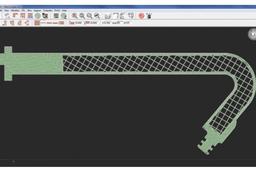
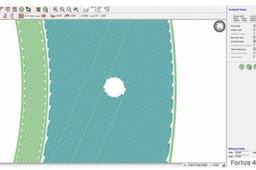
A unique characteristic of FDM technology is that a single part can have regions with different build styles, which can be used to make a part with variable densities. With just a few minutes of extra design and pre-processing, you can save hours of build time and/or dramatically improve the part’s properties.
insight
fdm
stratasys
parts
3dprinting
density
Curl Management Using Insight
Stratasys
in
3D Printing
0
0
Intermediate
Curl is defined as the distortion of horizontal surfaces caused by the shrinkage of a new layer as it’s applied over the existing layers, causing those layers to deform. This can be a challenge with parts that have thick cross sections or large at areas. InsightTM software features several tools that can mitigate part curl even on the most challenging geometries.
3dprinting
stratasys
curl
How to Solvent Smooth 3D Printed FDM Parts
Stratasys
in
3D Printing
12
1
Beginner
The normal surface finish of FDM parts is suitable for most purposes, but in applications where a smoother surface is required, solvent smoothing is an alternative to sanding, filling, and mass finishing.
finishing
processing
parts
fdm
stratasys
smoothing
3dprinting
How to Paint FDM Parts
Stratasys
in
3D Printing
5
1
Intermediate
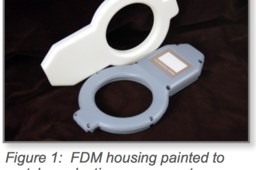
There are many reasons for coating FDM parts. These include UV protection, sealing, shielding, or surface modification, but painting FDM parts for an aesthetically pleasing finish is the most common. Painting brings a product to life by adding depth, contrast and character. This is true for concept models, marketing samples, and finished goods. For product development and many production applications, paint completes the desired look and feel. With a little know-how and a touch of patience, models, prototypes, and parts can look like production parts. The following instructions are for creating top-quality painted parts. For applications that do not require this level of finishing, skip any unneeded steps. A good paint finish traditionally starts with sanding and filling.
printing
3d
finishing
parts
stratasys
fdm
paint
How to Orient Parts for Strenth, Speed or Surface Finish
Stratasys
in
3D Printing
5
0
Intermediate
Build optimization is dependent on a part’s function (conceptual model, functional prototype, manufacturing tool or end-use part). Based on the part’s function, the user must select the appropriate orientation to balance or optimize surface finish, strength, or build time of the part. By following these best practices, you can cut down on time and waste.
speed
strength
stratasys
3dprinting
orient
How to Section Oversized Parts Using Insight
Stratasys
in
3D Printing
1
0
Intermediate
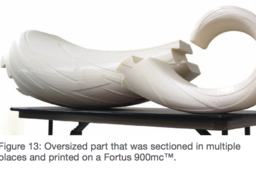
A part that is larger than the build envelope of a 3D printer can still be printed. Oversized parts may be sectioned and subsequently bonded. This tutorial will give you the best practices for sectioning oversized parts. Software: Insight software
insight
stratasys
3dprinting
sectioning
oversized
1
2
3
4
5